Healing my teenage rebel heart
Meeting my nineteen year old self, laying flowers at her feet

“Make peace
with all the women
you once were.
Lay flowers
at their feet.
Offer them incense
and honey
and forgiveness…”
Emory Hall
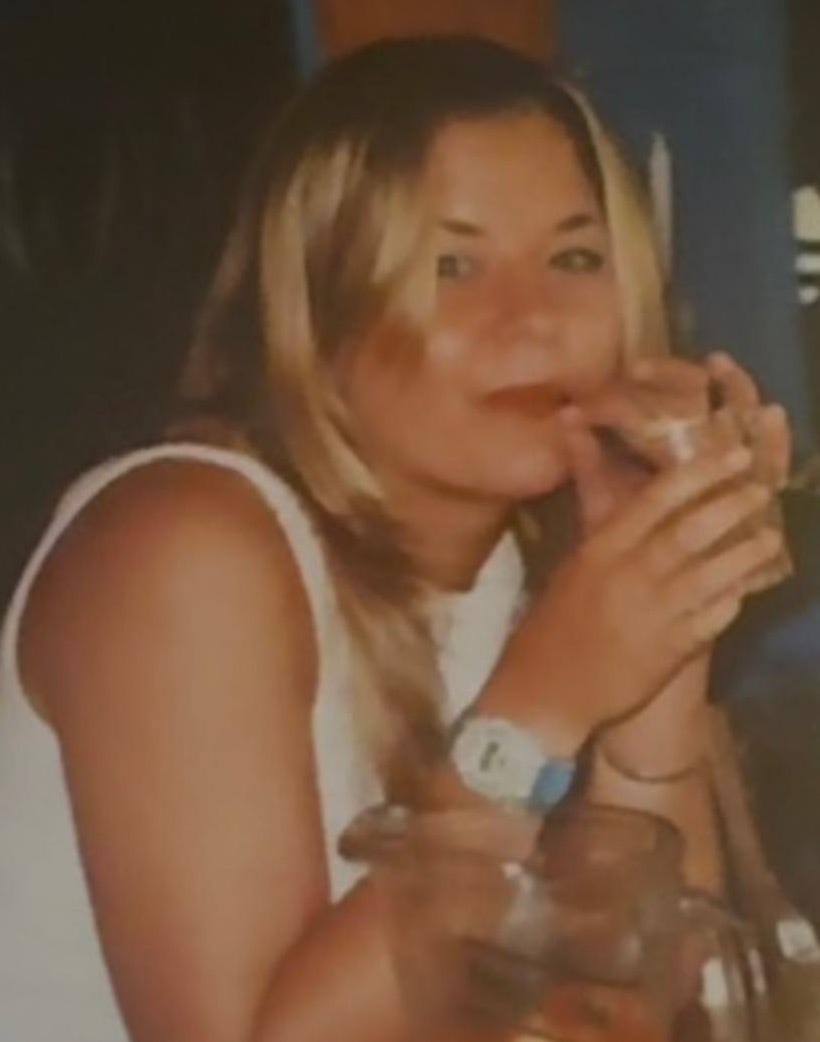
This is an extract from my memoir in progress —Love Sick: A memoir of Loss, Longing & Liberation.
When we stop drinking, drugging, or loving people toxically—when we recover and heal—and begin sorting through what is called in 12-step recovery programmes “the wreckage of the past,” there are many people—friends, family, colleagues, acquaintances—with whom we make amends, to set things right and gain peace, where possible, for all involved.
Often, the hardest amends to make are with ourselves: the younger versions of us who were just doing the best they could, with the tools they had.
With the light that Internal Family Systems (IFS) work has shone on my younger parts, not yet soothed and at peace; by seeing these, I’ve been able to release the trapped grief and sorrow created by attachment trauma, to let my freed teenage rebel heart soar again.
Forgive yourself. Honour the parts that were seeking release, protecting, connecting—as best they knew. Lay flowers at their feet, too.
This piece was written in the summer of 2025.
This past summer, I took a short trip back to my late teenage years.
To Camden, London, the origin of 90’s Laddette culture, boozy broken behaviour and Brit Pop – Oasis, Elastica, Blur, Pulp, Supergrass and Suede.
My university years.
Oasis are in the middle of a comeback tour, having a renaissance; it felt like Definitely Maybe I should too. I went with my seventeen-year-old son, and my nineteen-year-old self.
It is a pilgrimage, an honouring. We stay in Tavistock Square, a hotel on the site of Virginia Woolf’s old London house. I quip to a friend:
“I want to channel her energy. The writing, not the suicide…”
“Thank God…” he shoots back.
Something, though, will die.
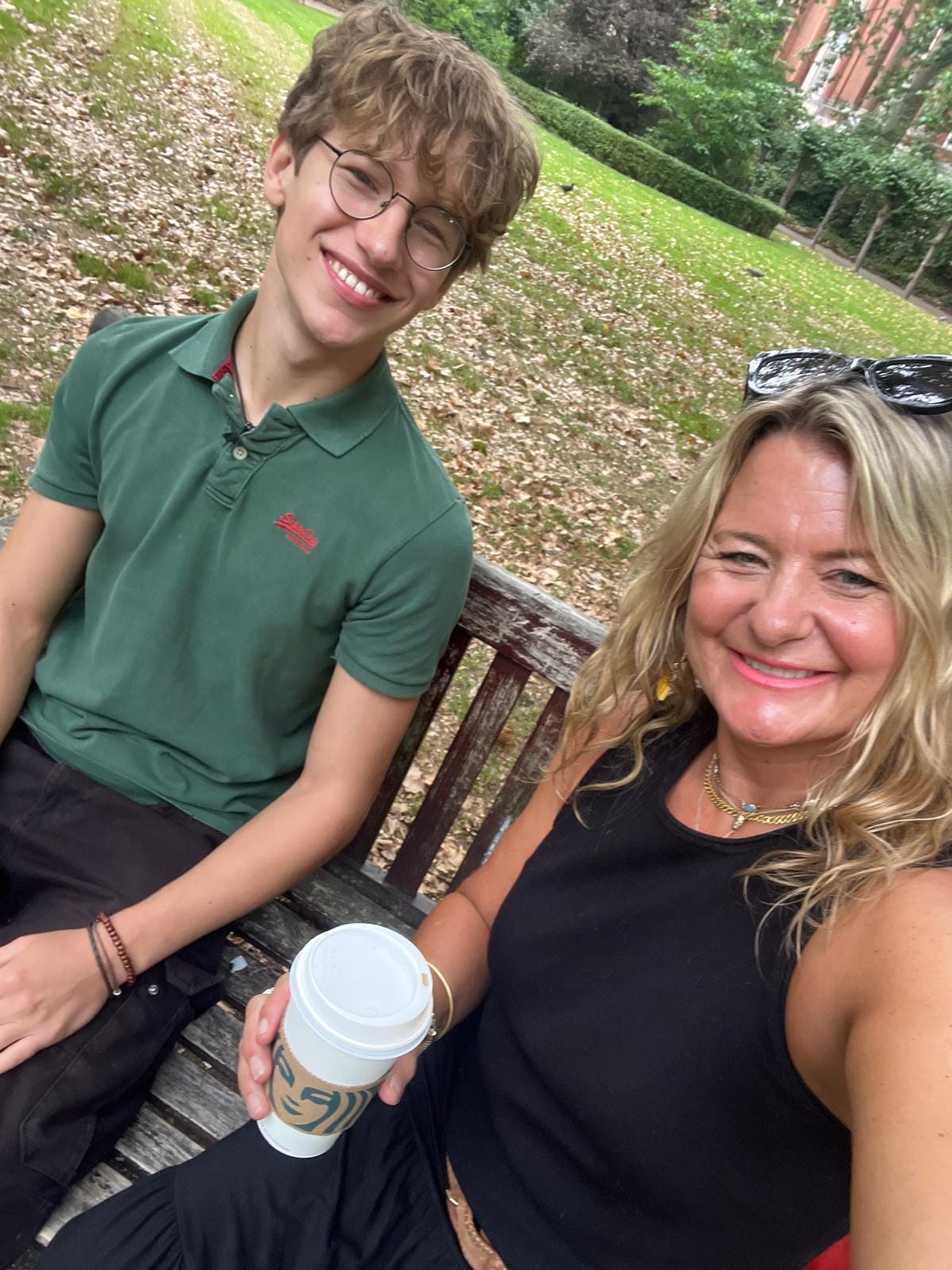
We arrive on a Sunday with sullen weather, hot and heavy.
We leave on the Tuesday morning.
When the chambermaid bustles into our departed room on that Tuesday, she will smell my new amber perfume from a stall in the market, my son’s lemon shower gel, the stewed tea on the bedside table.
She’ll see discarded tags from fresh teenage trainers, empty contact lens cases, gum packets in the bin, mascara smudged on towels tossed in the bath.
What she won’t see (but does she sense…?) are the parts of the girl I have shed.
Layers of sorrow expunged.
I have left there the numbness and blindness and devastating ache that drove nineteen-year-old me.
Across years that should have been more carefree, an exploration from roots to find wings, from childhood to adulthood, across a sturdy bridge with handrails and grippy shoes.
Instead, those years were chaotic, dangerous, like climbing alone across a sheer sharp unknown rock face.
Parts of that nineteen-year-old do fall from me on that trip, yet it is a safe, guided, secure descent. One held with love.
I remember her.
I witness her why.
I forgive her.
I become more free.
On the second day of our trip—an overcast muggy Monday promising rain—we stride from Tavistock Square, past Euston station, directly ahead, a straight path all the way to Camden.
I breathe it in. This London.
The shabby facades of newsagents with fruit outside, wasps lurking; barbers doing fades and undercuts; coffee shops shouting yoga; stag-dos already filling up on cheap booze in freshly opened pubs.
We reach the iconic KoKo music venue, the unofficial passing point into the medley of Camden.
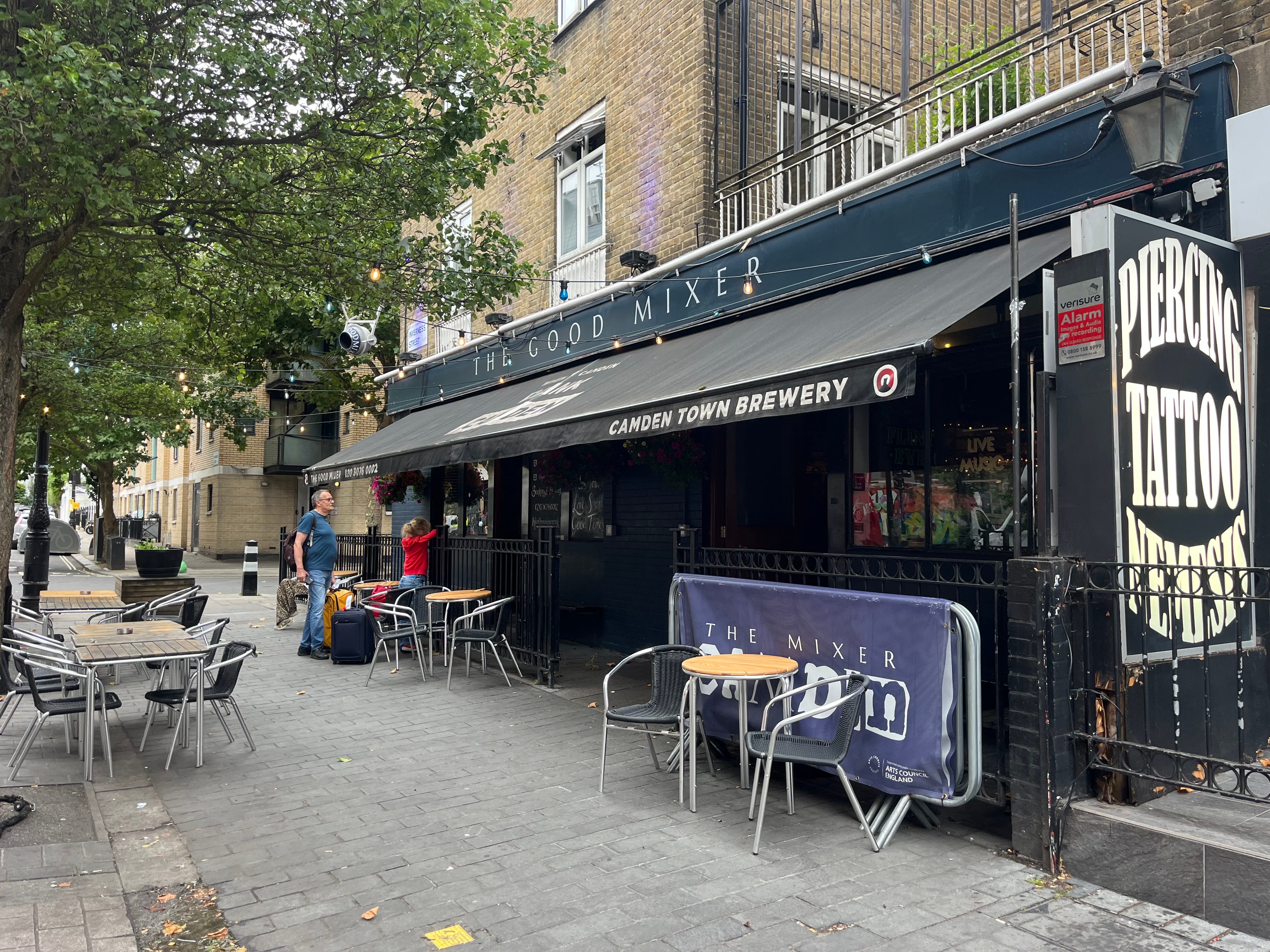
Venturing along the High Street, I feel my insides dance, feel the melodic thud push harder at my chest, my ribs, up into my throat.
I catch glimpses of watering holes my nineteen-year-old self knew intimately – the World’s End, the Buck’s Head, the Good Mixer. By the Oxford Arms, I can resist no more. We dip in out of the speckling rain; one latte, one lemonade. Rock and fucking roll.
I tell my son tales of these drinking dens, the all-day boozing stints that spin in my faraway past. He half smiles, bemused at why you’d want to drink all day, asking: “What would be the point?”
“Errm…quite…” I say, swallowing a gulp of shame with the last of my latte. “Quite.”
I love that he sees no point. Has limited pain to numb. I silently pat myself on the back. A quiet, important milestone in my parenting, noted.
We leave, make our way to the Lock, and the canal, the market humming with food stalls, vibrant and varied.
How altered it is, I think. How altered am I…?
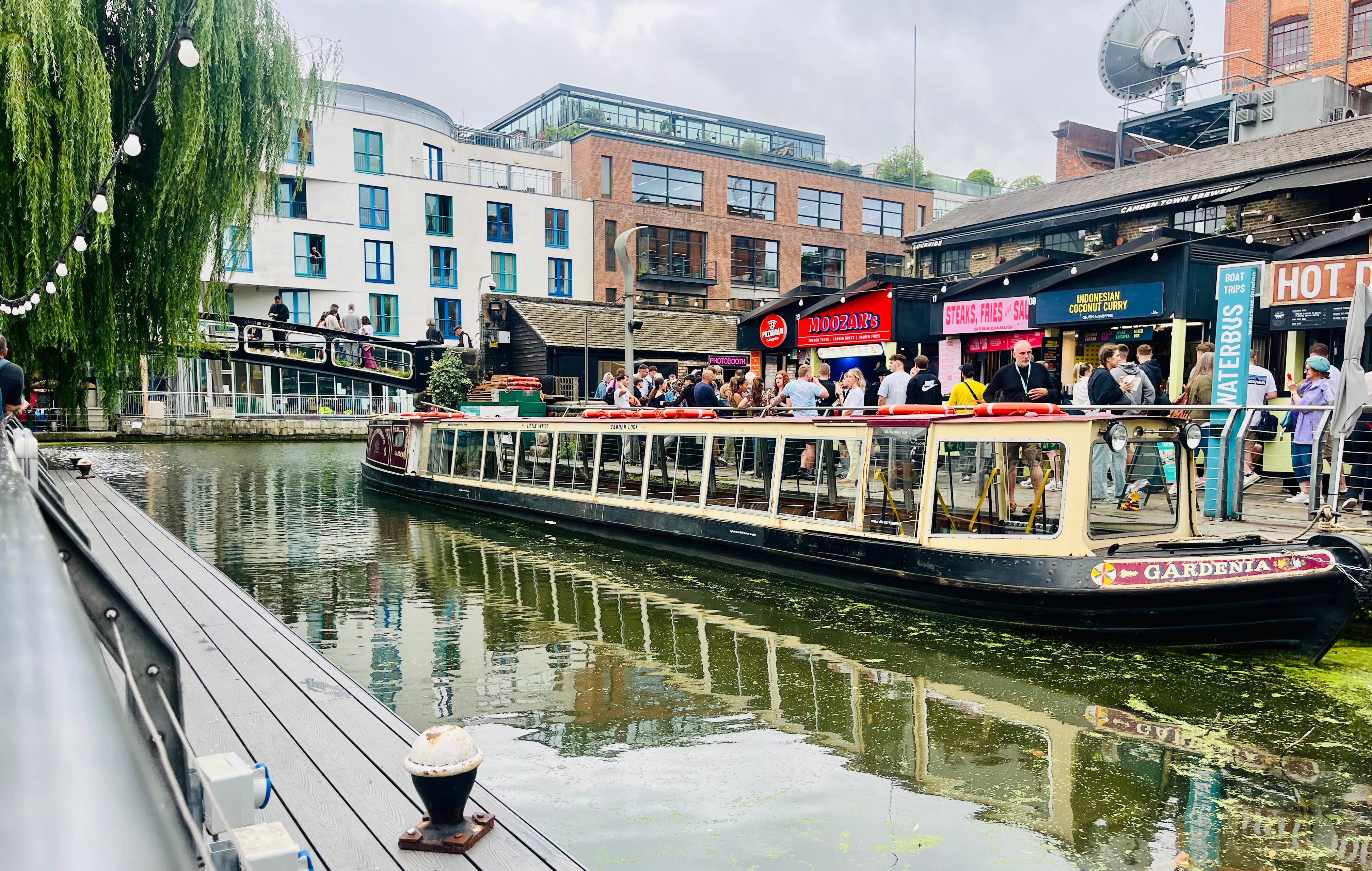
I slouch against the entrance to a cinnamon bun shop, spices and cold brew filling my nose; my son waits for his second fried chicken platter of the last twenty-four hours. This trip is for his birthday, to celebrate his love of new foods, places, experiences.
I watch a starling perched above on the guttering, its plump freckled tummy with an oily sheen, head darting around, inquisitive eyes, long brown beak, observing the flock of humans below. He is so perfect he looks mechanical, like a prop.
I wonder where the others are. The murmuration he is usually in, flying and swooping, a sea of starlings in the sky, all as one, being the same entity.
I think how there is a murmuration of ‘mes’ out there in time. Young me, university me, work me, sporty me, friend me, daughter me, girlfriend in my twenties me, girlfriend in my fifties me, writer me – how they are separate parts of the same moving mass of my being, this Geraldine.
We are never fixed, always moving, always in flux.
My son’s food arrives. The starling, he flies away.
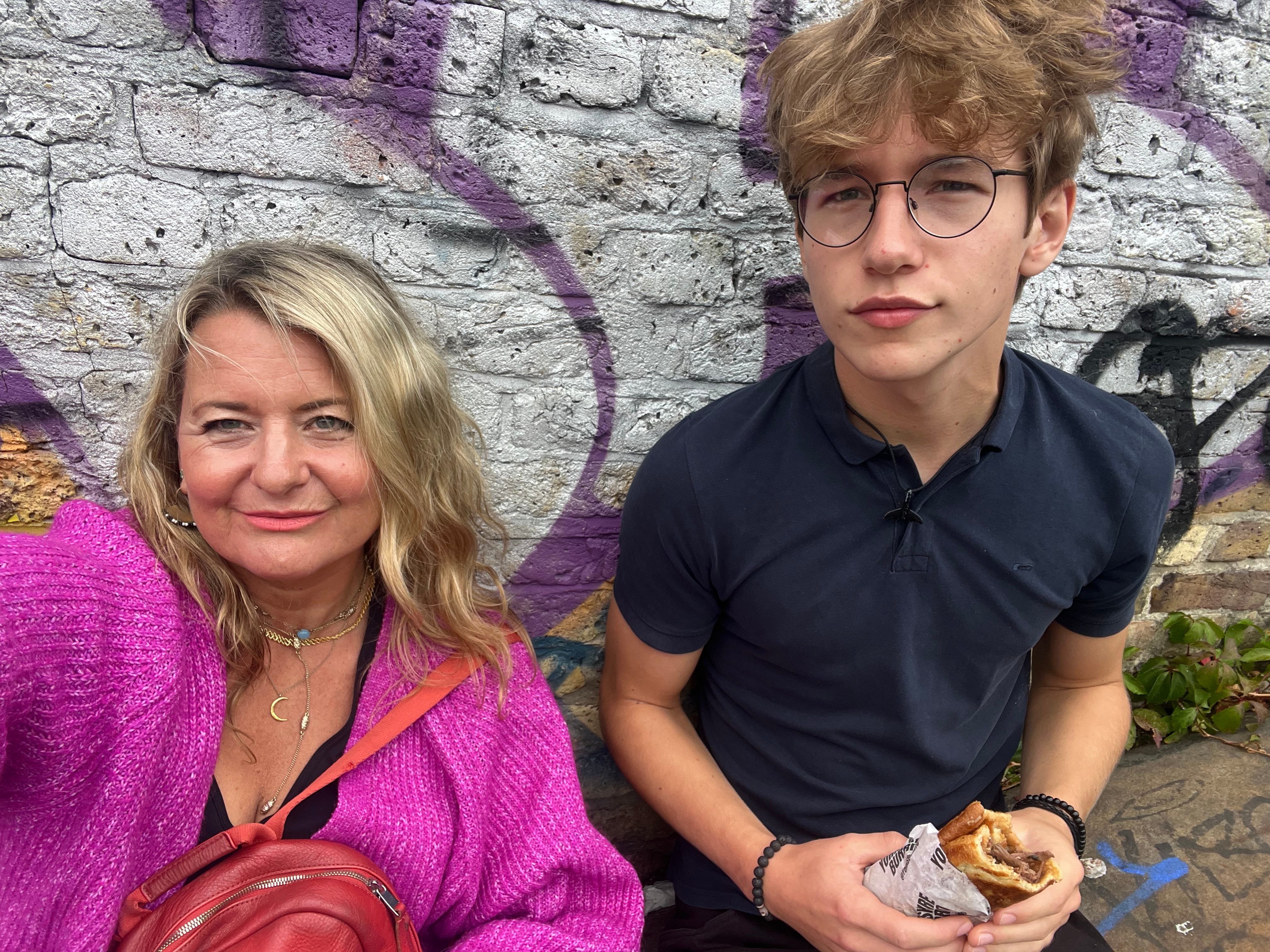
Tavistock Square, where we are staying, is in Bloomsbury, a pocket of London I barely knew when I studied here thirty years ago. It is a blind spot; a connecting district between west and north, described as the academic and medical quarter, home to University College London (UCL), the British Medical Association, the British Museum, and the National Library.
It is famous too, of course, for the Bloomsbury set, a collective of modernist writers that had Woolf and the Hogarth Press at the epicentre.
In my history, though, it barely features prior to this trip with my son.
Except it does.
In a place I don’t want to look.
Because I did go there once in my years in London.
I stayed in a flat with my mum, and her new partner (the one she left us for), and my auntie, uncle, cousins. We did what our family does – met up and drank all afternoon, heavily.
In the old pubs around Russell Square, dark-wooded and ale-smoked, cascades of hanging baskets, flowers and colour waterfalling over the frosted pub windows, we were crammed onto picnic benches outside on the street with locals and tourists alike, enjoying our Saturday, raising pints and raucousness into the last of the evening sun.
An all-dayer flowing with laughter and loud chats, camaraderie, and the connection that booze bestows. Then, it happened.
That indefinable moment we hope to control. But we rarely can.
The unknown point the tide of the night takes a tumbling turn, becomes tumultuous with hidden pain.
Switching from a fun night-out to an alcoholic wrecking-ball disaster.
For problem drinkers, there is that instance when it alters, the ugliness stalks in, crawls from the stocks.
When the rational mind is fully numb and inebriated, so dark emotions begin to swarm in; a havoc to behold.
All those who know that they do not drink normally, know it.
If you are lucky, it takes place in a blackout. A void of unaccounted-for hours, events, actions.
If you are unlucky, you remember. It all.
This buried evening of my past, back at a now unidentifiable Russell Square flat, I was smoking on the balcony with my uncle, slurring my words and sullying my life, berating my mother. How I held hate for her for leaving. Hate for what she had done.
Unspoken anger began twisting its way out, slicing cruel words into the cooling night air.
Bludgeons of rage, hurled as fireballs; spit and fury, sadness and spite unleashed.
All within earshot. All on show.
This night hovers at the edge of my darkest consciousness. I have neither remembered nor forgotten.
I wish I could tell you what I said. What vitriol did I spit? The unbearable turned into unsightly despise. Leaving its bad taste over everyone.
There was nowhere safe or contained or appropriate to put the anguish. It came out like a spew of sorrow: disgusting and distasteful.
Of course, I did not get the repair or release I craved. It was an act of further harm, as so much of drinking to forget is.
My mum was hurt, humiliated. Stony-faced and furious in the morning, refusing to speak to me. I, further ostracised.
I wish I had known better.
That I could have done better.
But I didn’t. I did not know better.
Not for decades. It took years to find healthy ways to slay the demons.
I didn’t know how to repair, process, honour or heal the hurt.
So I did what I’d been shown.
I just created more.
Now, in 2025, I amble the same streets with my son, warmth on our faces, shortcutting through the park at the centre of Russell Square, on the way back, after Camden, from a short trip to the British Museum and back to our hotel, I wonder where that flat is in proximity to us right now, in this life.
I have lost its exact location from my mind, yet the scar of shame, though lessened, still glints.
Will I ever forgive myself for how I didn’t know? Couldn’t know…
This teenage me, now, she knows I have her back. Fully.
She can trust me, adult me, to be our parent, friend, guardian, guide, guru. I can let her pain be witnessed.
We have come very far. I not only lay flowers at her feet. I have grown and nurtured her a whole beautiful garden.
Somewhere to rest. Somewhere to lay. Somewhere to belong.
My son and I reach the end of our trip. It’s been epic in so many ways: the fun we’ve had, the bonding and memories made. I feel like I’ve time-travelled too. I feel restored. We return home, changed.
It is a still, hot summer’s evening in Sussex. The wind whips up salt and seaweed from the nearby beach, up into my nose, anchoring me back in home, in place.
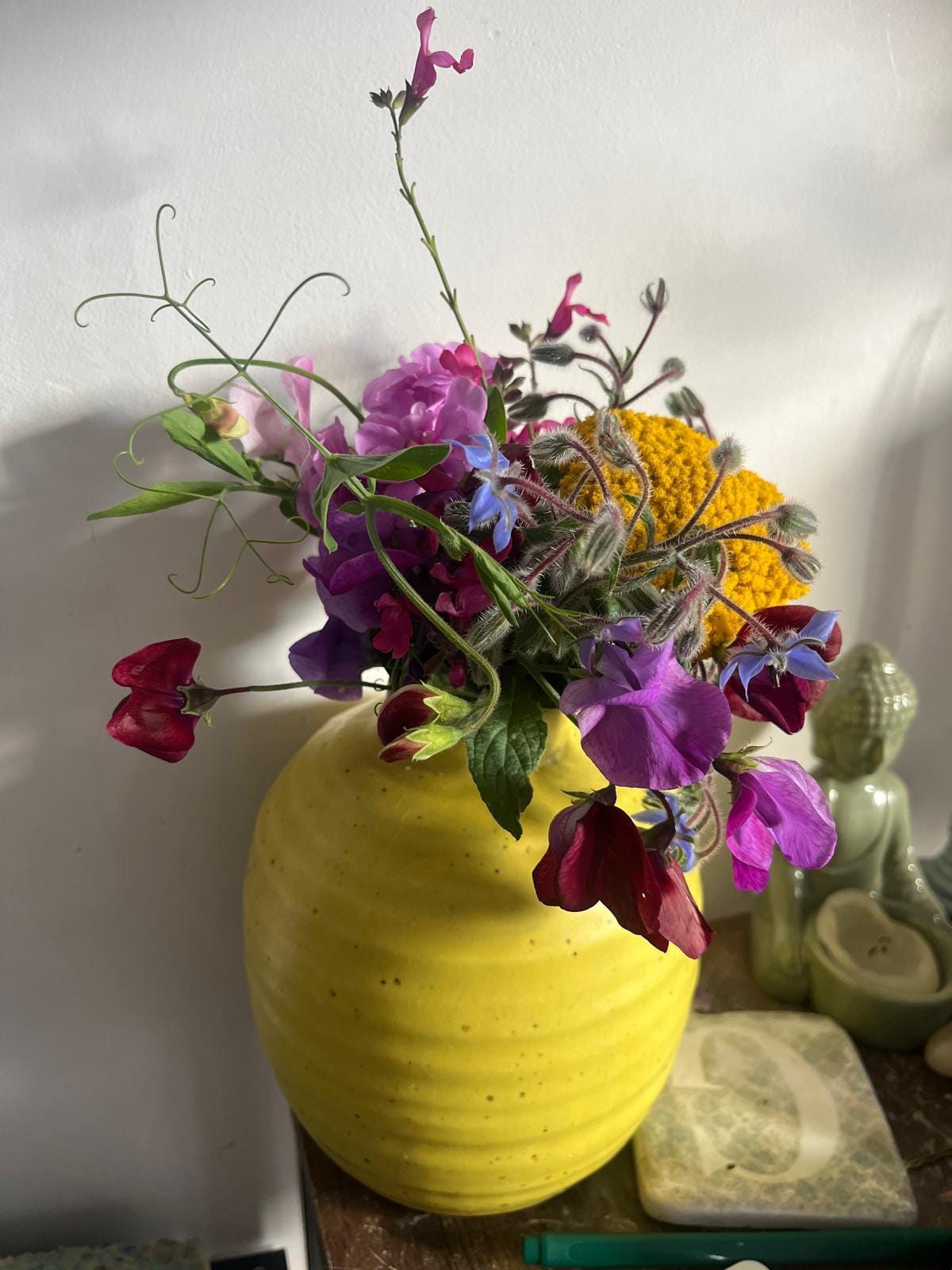
I open the patio doors, send my arms wide to greet the garden. I step outside. From the borders, I pick the many sweet peas that have bloomed while we have been gone – yellow pinks, pale violets, deep purples, blushed corals. As I pick, I see their heady pollen fall, catch the golden light, the perfume dances its aroma.
I take them inside, fill the round yellow vase with water, arrange them on the small table by the grey sofa.
I smile. I am at ease. There is a peace.
My pilgrimage is complete.
Your writing is so evocative. It brings back so many memories of my own 90s student days it’s almost painful to read.
Beautifully written Geraldine . Such a vivid account of your late teenage life….